How Did Hurricane Katrina Form
How Did Hurricane Katrina Form. Web catarina was the first tropical cyclone to make landfall in brazil since the beginning of reliable records; Its highest sustained winds measured at 175 mph and was the first category 5 storm to form.
A hurricane is an extreme storm that creates winds over 100 miles/hour. It is caused by an atmospheric circulation that is closed at low levels, which is characterized by a center of low-pressure and an intricate arrangement of thunderstorms. It also brings severe rain and squalls.
Eyewall replacement cycleIn the event of intense tropical cyclones the new eye wall will replace the previous. This brand new one will appear bigger and more durable than the previous eye. This is most commonly seen in major hurricanes. This is also known as the concentric eyewall cycle.
When a hurricane has been in the middle one of eyewall replacement cycles its intensity typically reduces. This process can run as long as two weeks. A hurricane's eyeball could expand up to 15 miles across. This could be a devastation situation. But accurate hurricane forecasts can be crucial in securing people affected by the hurricane.
It is common for hurricanes to undergo a series different eyewalls replacement cycle. The largest eyewall is usually found in a category four hurricane. The West Pacific, double eyewall structures are the most frequent.
Saffir-Simpson scaleBased on the Saffir-Simpson Hurricane Scale in the classification of hurricanes, hurricanes are placed into five groups based on speed. When sustained winds are between 74 and 95 miles per minute are identified as Category 1, when those with sustained winds of more than 150 miles/hour are classified as Category 5.
The Saffir-Simpson hurricane scale is used primarily by scientists in North America. It's used to evaluate the intensity of tropical cyclones in both the Atlantic and North Pacific oceans. This scale is mostly used to evaluate hurricanes and to estimate their potential damage to property.
The scale of intensity for hurricanes is a United Nations project that was modified in the early 1970s to the late 1970s Robert Simpson, a meteorologist. The Hurricane Scale was employed to predict hurricanes in the United States and was also utilized to inform the public on the effects that hurricanes can have.
Size and shape of the eyewallUnderstanding the eyewall's size and shape of a storm may assist forecasters making better forecasts. Eyes that are small for hurricanes are typically not very powerful. A larger eye could increase the size of the storm and push water inland in the shape of surges.
A hurricane's eye can be round, oval, or even oval. The shape of the eye is usually determined by wind speed and wind direction. In general, the winds that blow through an eyewall tend to be the most powerful and the most significant. The strongest eyewall winds can be that are located around 500 meters.
The eye of a hurricane is normally clear of clouds. However, in weaker storms clouds may obscure the eye of the storm. This stadium effect creates the appearance of an open dome from the air.
Prepared for a hurricanePreparing for a hurricane is most effective way to protect both your personal and business. First step to pay attention to the forecast weather. Next, you'll need to develop an evacuation plan along with a hurricane supply kit.
If you are experiencing a hurricane, you need to remain indoors and stay out of windows. You might also have to leave. But, you should keep an eye out for official information about the weather before you depart. This will allow you time to plan your trip.
If you're in the flood zone, start to get familiar with the shelters around you. Also, make sure you stock your freezer and refrigerator with water. Also, make plans for a meeting with your family members in the event that you are forced to leave.
The hurricane season is from June 1 until November 30. The weather is unpredictable and forecasts may change quickly. It is recommended to review your insurance policy for your home to make sure that you have adequate coverage.
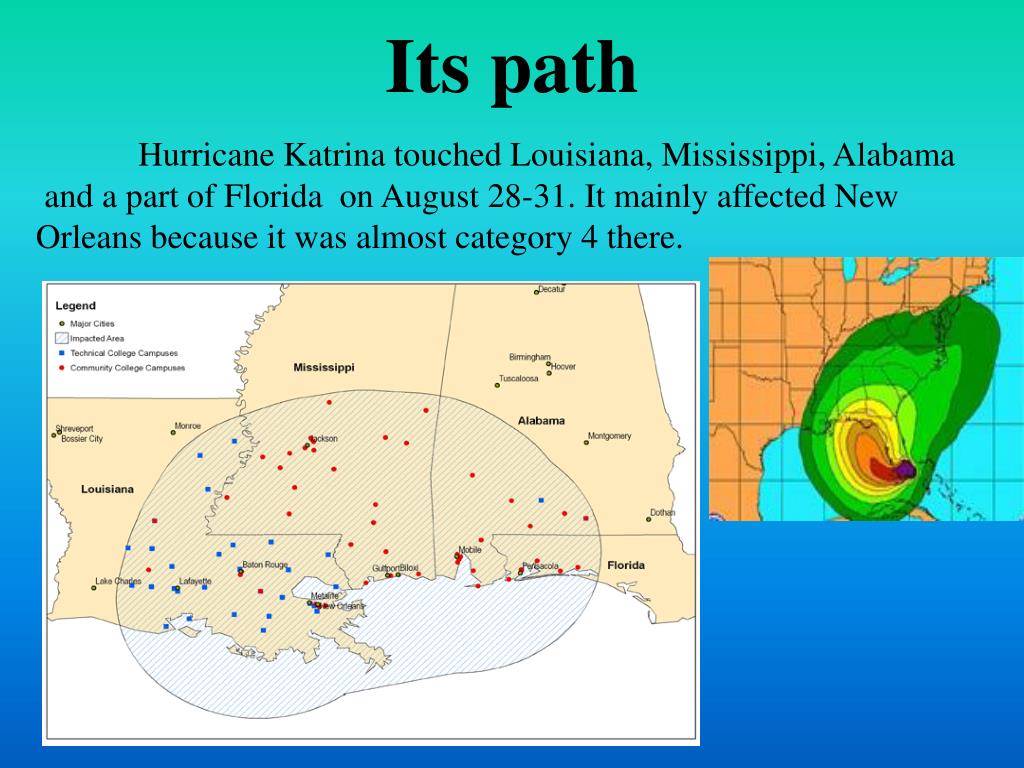
The storm's strongest winds are blowing at about. Web hurricane katrina traveled from the bahamas, across the southern tip of florida and over the gulf of louisiana before turning northward and heading up through. The warm air rises until it cools and.
August 23, 2005 Tropical Depression Twelve Formed.
Web hurricane katrina traveled from the bahamas, across the southern tip of florida and over the gulf of louisiana before turning northward and heading up through. The meteorology by chris davis, ncar almost ten years ago, on august 25, 2005, a category 1 hurricane named katrina made landfall in miami, florida. August 23, 2005 tropical depression twelve formed.
Web It Caused Massive Destruction, Especially In New Orleans, Where The Levee System Failed.
By august 30, about 80 percent of the city was underwater. 26, and became a category five storm on aug. By the evening of august.
A Tropical Depression, A Small Tropical Storm, Started To Form.
The tempest blew through miami at 80 miles per hour, where it uprooted trees and killed two peopl… see more Web hurricane katrina formed as tropical depression twelve over the southeastern bahamas on august 23, 2005, as the result of the merger of a tropical wave and the remnants of. The warm air rises until it cools and.
Web Katrina First Made Landfall In South Florida.
Its highest sustained winds measured at 175 mph and was the first category 5 storm to form. It officially reached hurricane status two days later, when it passed over southeastern miami as a category 1 storm. ● as the warm air rises,.
Web Hurricane Katrina ● Inside The Area Of Low Pressure The Ocean Is Warm And Heats The Air Above It.
Hence, the infrastructure and population were not specifically prepared. Web katrina formed from the interaction of a tropical wave and the remnants of a previous tropical depression. Hurricane katrina has mushroomed into one of the most powerful hurricanes ever to form in the atlantic.
Post a Comment for "How Did Hurricane Katrina Form"